Industries
Regulatory support across sectors: the industries we work with
The same regulations apply across the EU, UK and EEA market, but what they require varies considerably depending on what you make, how you sell it, and where you are in the supply chain. A chemical manufacturer registering substances under EU REACH carries different obligations than a consumer goods company importing finished articles. A cosmetics brand formulating professional products faces CLP and poison centre notification requirements that may not apply to its retail line at all.
Lirk Nor works with manufacturers, importers, distributors and non-EU companies entering the EU market across a range of industries. The work is defined by what the regulation actually requires for your situation.

Chemical manufacturing
Manufacturers and importers of substances and mixtures carry some of the most direct obligations under EU chemicals legislation. REACH registration, CLP classification and SDS authoring are not independent tasks: a new harmonised classification can require SDS updates, label changes and downstream communication at the same time, and a Candidate List addition adds SCIP and Article 33 obligations across every affected product.

Paints, coatings & adhesives
Formulators in this sector deal with some of the most regulation-dense portfolios in the EU market, where CLP classification and poison centre notifications under Annex VIII of CLP apply across virtually every product line, PFAS in waterproofing and protective coatings is an active restriction area at ECHA, and SDS documentation across a large mixture portfolio can require more maintenance work than the underlying substance compliance itself.

Consumer & industrial products
Companies selling formulations across consumer and professional channels have to manage the compliance differences those channels create. Poison centre notification requirements under Annex VIII of CLP apply differently depending on the intended use, CLP labelling requirements vary by product category, and SVHC in articles generates obligations that can affect an entire product range at once.
Electronics & semiconductors
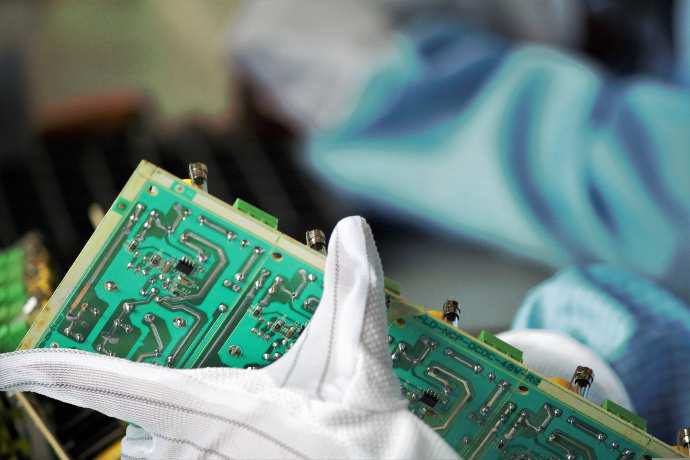
Electronics manufacturing relies on PFAS as both a process chemistry and a material in finished products, and the proposed EU universal PFAS restriction will affect supply chains well before any final implementation date. SVHC obligations in articles and RoHS substance restrictions apply across component sourcing and supply chains where substance-level documentation is often incomplete at the component level.

Cosmetics & personal care
Cosmetic products sold in the EU fall under the EU Cosmetics Regulation, but REACH and CLP apply alongside it for professional-use products, biocidal preservatives and any component that requires a safety data sheet. Where the responsible person, the formulator and the distributor occupy different positions in the supply chain, the obligations under both frameworks need to be tracked and managed separately.

Manufacturing & industrial
Companies that use chemicals in their processes are downstream users under REACH and are required to verify that those uses fall within the exposure scenarios communicated by their suppliers, with specific documentation obligations when they do not. Biocide compliance under BPR, CLP obligations for workplace chemicals and SDS management across production operations each have their own requirements and update cycles.

Automotive
The compliance demands on chemical and material suppliers into automotive have grown with the new ELV regulation, the proposed universal PFAS restriction and the Circularity Vehicle Passport. Each of these creates data and documentation requirements that OEMs are already beginning to push further up the supply chain.

Textiles & apparel
Importers of finished textile articles from outside the EU carry REACH obligations for SVHC in those articles, and many encounter those obligations for the first time when a customer requests substance information. PFAS in durable water repellent treatments is an area of active restriction under REACH Annex XVII, and the compliance question covers both the substance content of finished goods and the reliability of the supplier data behind it.

Construction & building materials
Construction products frequently contain substances in article form that carry SVHC communication obligations under REACH, and the obligation applies equally to goods manufactured in the EU and those imported from outside it. PFAS in waterproofing membranes and sealants, biocidal treatments for wood and surface protection, and CLP requirements for construction chemicals each operate under separate regulatory frameworks with their own documentation requirements.

Does your sector not appear in this page?
Contact us and let's discuss
LIRK NOR's team will reach out to you to discuss any regulatory support to your specific sector.
If you'd rather discuss in a free discovery call, make sure to book an appointment by clicking on the button below.